
The Great Temple of Ramses II
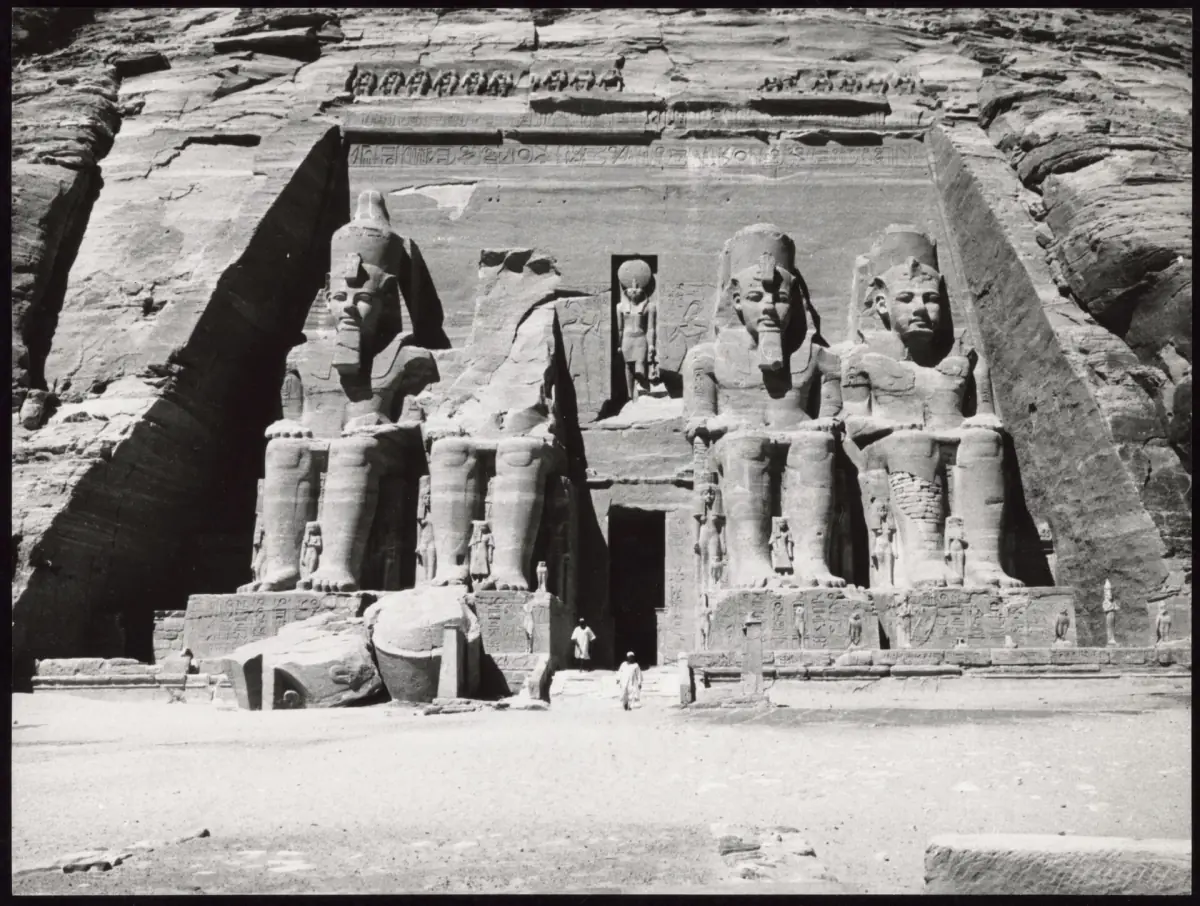
The Ramses II temple at Abu Simbel is a rock-cut temple from the 19th Dynasty, dated to about 1264 BC. Four seated figures of the king, each about 21 to 22 m high, sit in front of the cliff, and the temple runs deep into the rock behind them.
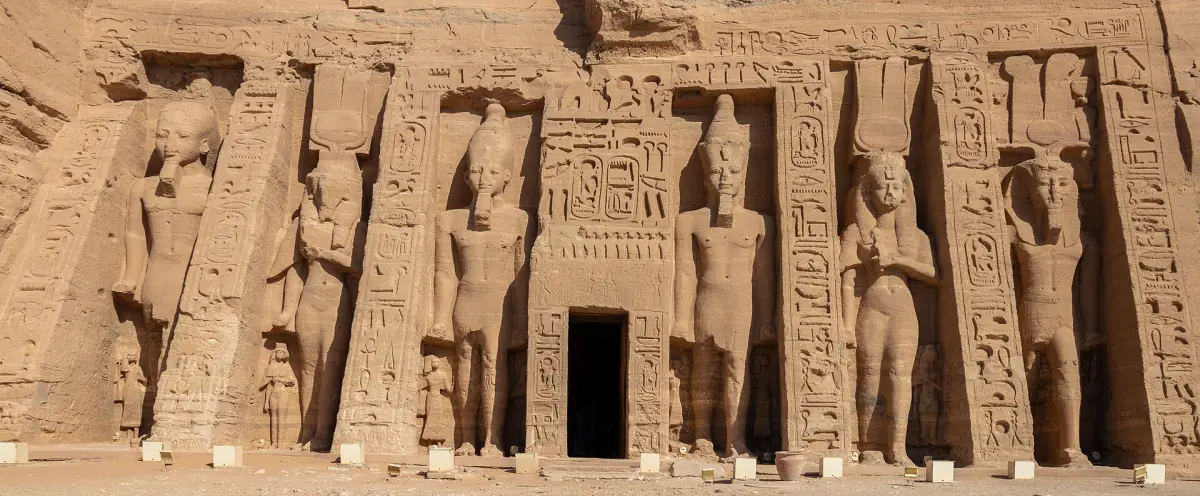
The smaller temple to the north belongs to Queen Nefertari and the goddess Hathor. You can see both in one visit. If you are still planning how to get here, start with Abu Simbel day trips from Aswan.
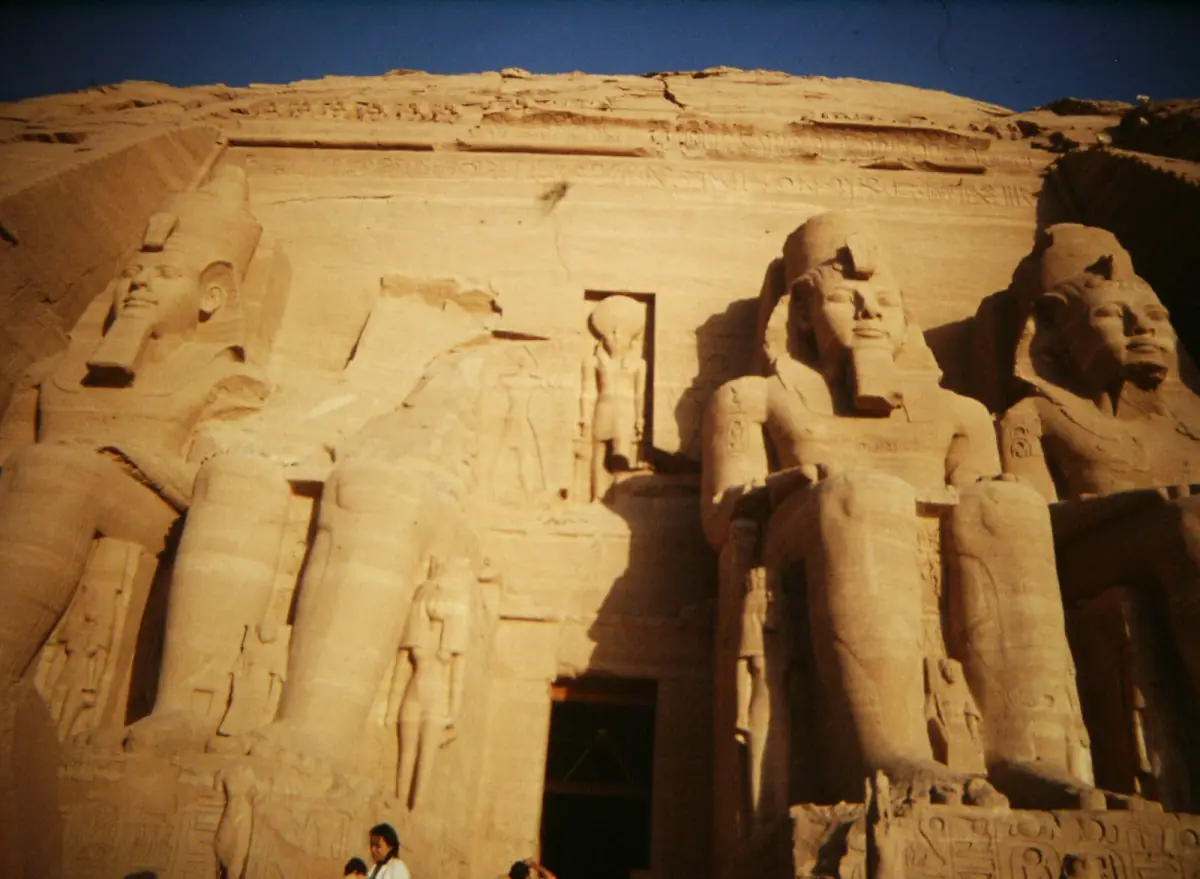
The four colossi and the facade
The statues you see from the square.
The facade is carved from the cliff itself. The four seated statues of Ramses II are the best-known image of Abu Simbel. Their height is 21 to 22 m, depending on the measurement.
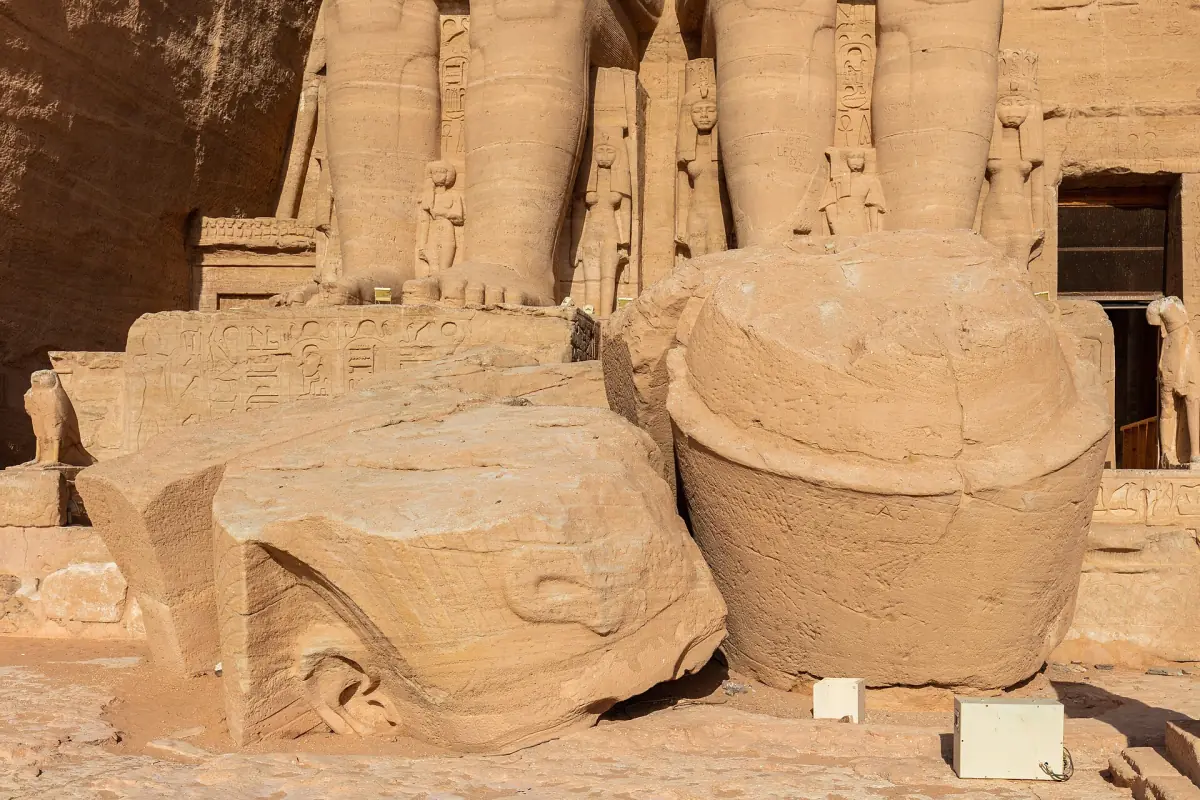
The upper part of one colossus fell in antiquity. The collapse is attributed to an earthquake, and the fragments still lie in front of the facade. The damage did not come from the modern move.
For the exact numbers behind the site, see Abu Simbel facts.
Our pick: a private day with time at the temple
A private guide and the entry, with a Nubian village visit on the way back.
Hand-picked tours, booked through GetYourGuide. Prices are indicative starting prices in US dollars (as of October 2026). Tap a tour for live availability and the current price in your currency.
Abu Simbel tours that include the Great Temple
Day trips from Aswan, flights and longer tours with live prices and availability. Most programs visit both temples.
The great hall and the Kadesh reliefs
Eight statues, a battle and a quiet second hall.
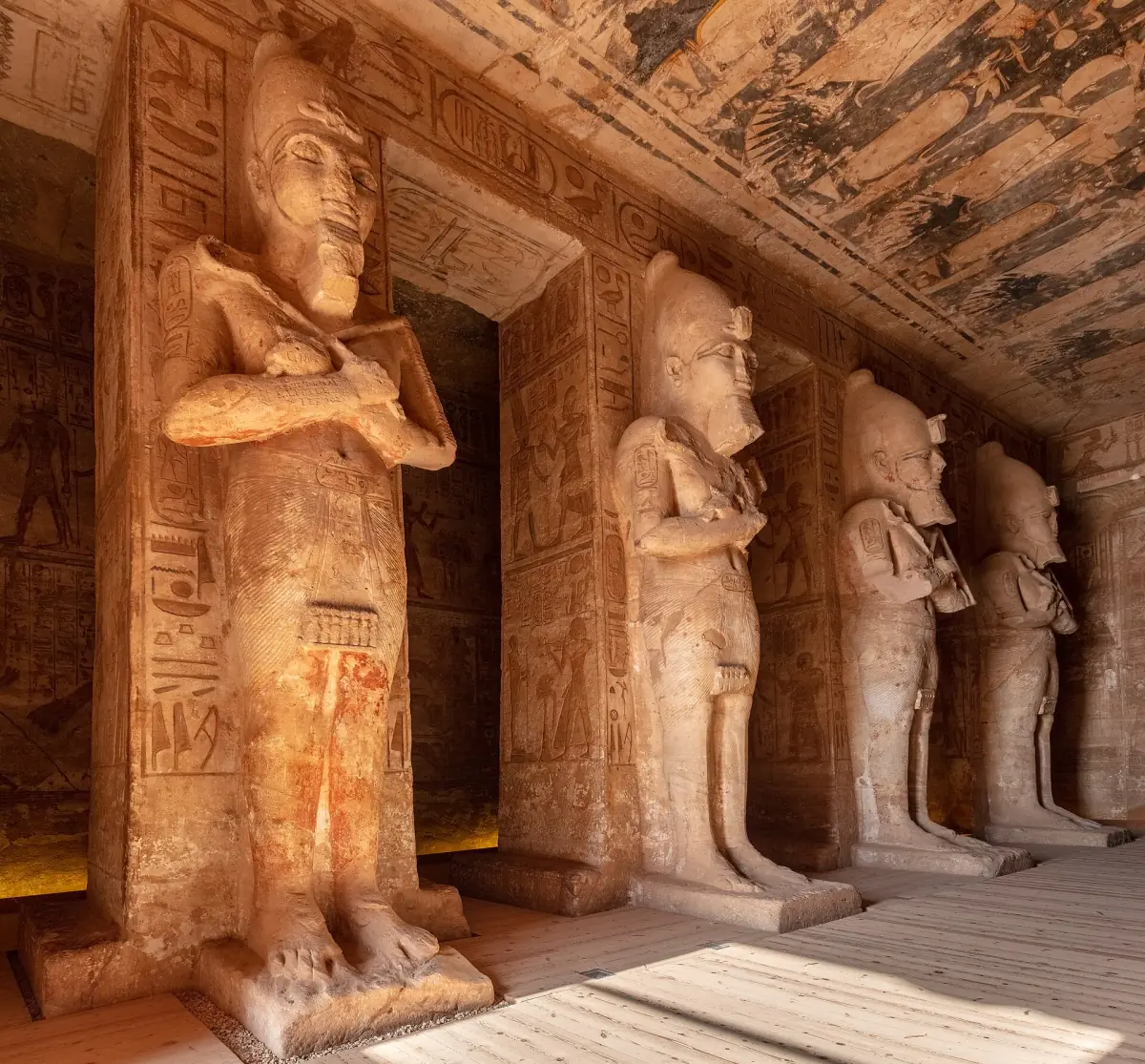
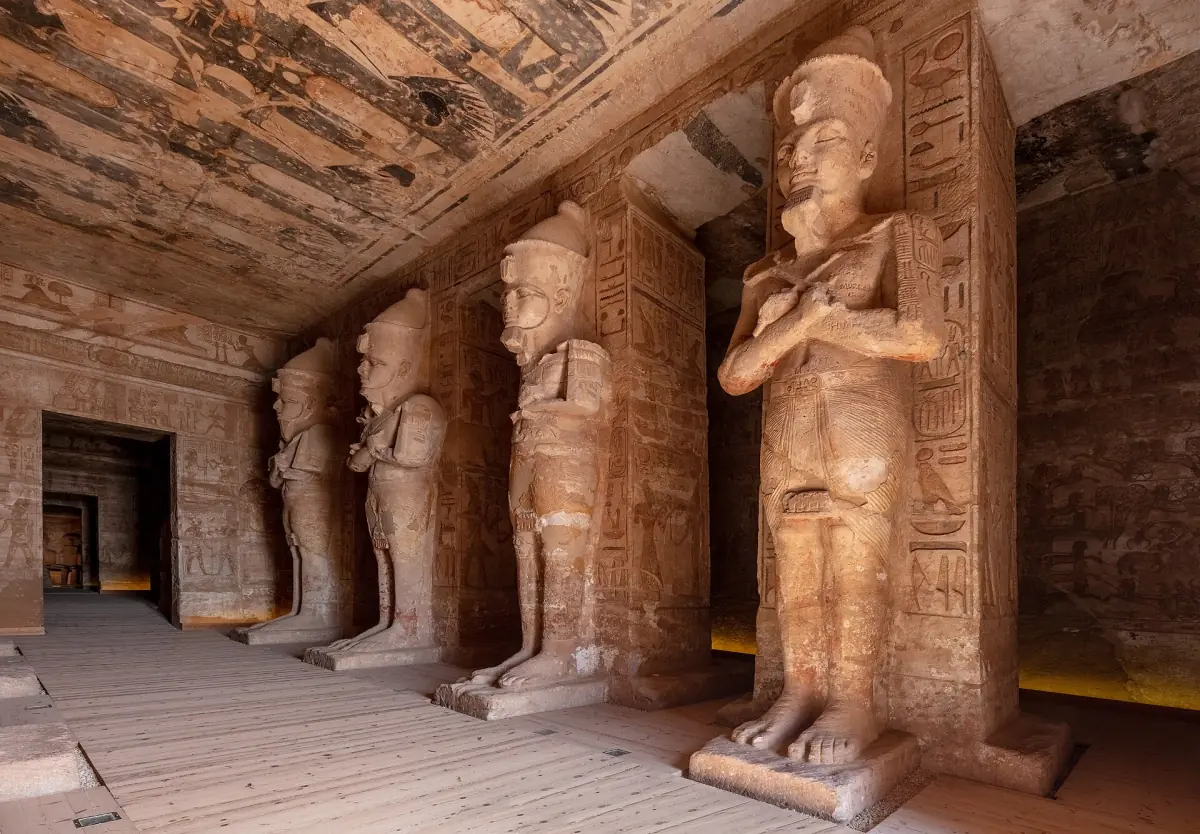
The first hall has eight figures of Ramses in the form of Osiris, set against the pillars. A second, smaller hall with four pillars follows, then a vestibule and the sanctuary.
The north wall of the great hall shows scenes from the Battle of Kadesh, dated to the king's fifth year in power. This is the king's own picture of the battle. It does not prove a clear victory.
More rooms, reliefs and the painted ceilings are on the page Inside Abu Simbel.
The sanctuary and the Sun Festival
The innermost room.
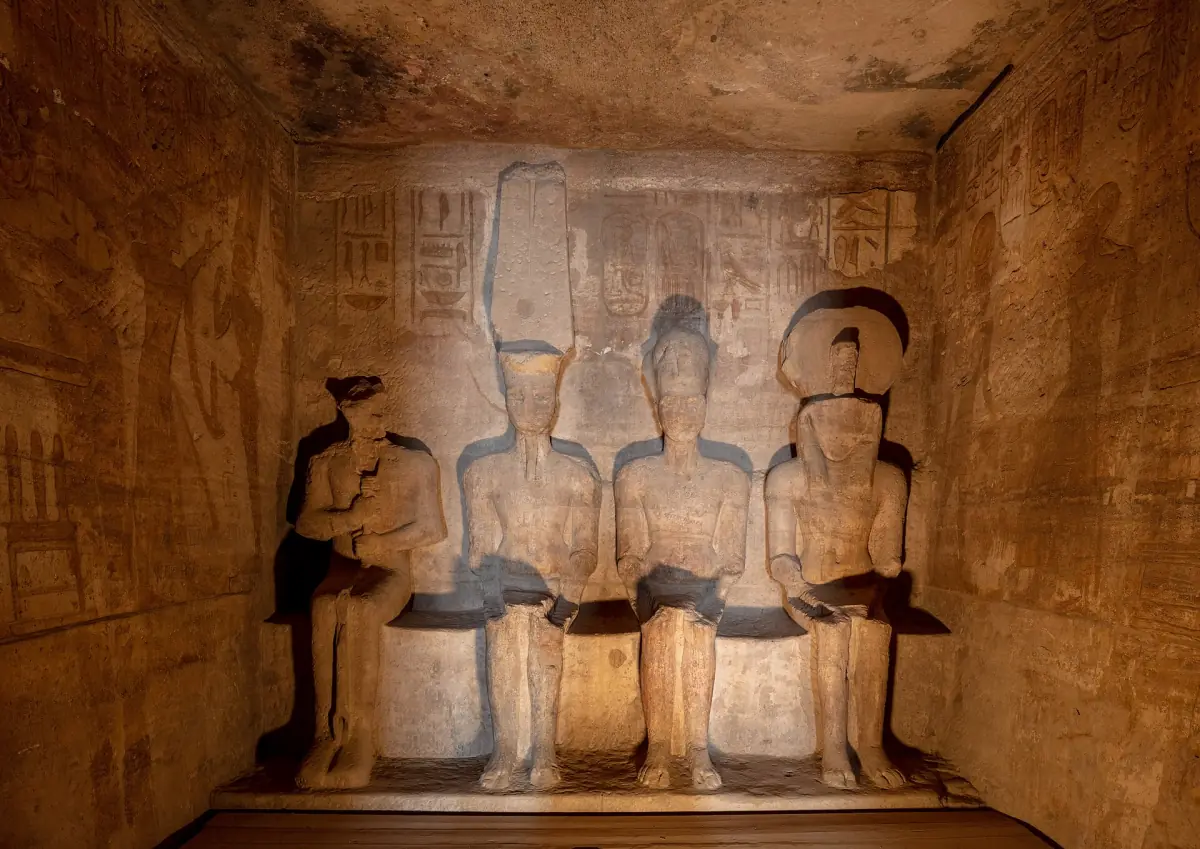
At the back, four seated figures share the sanctuary: Ptah, Amun-Re, the deified Ramses and Re-Horakhty. On 22 February and 22 October, sunlight runs down the axis of the temple and lights three of the four. Ptah stays outside it.
Read more about the dates, crowds and ticket prices on the Sun Festival page.
A temple that was moved
Why it stands where it does today.
Why it was moved
The lake created by the Aswan High Dam threatened to flood the Nubian monuments. A UNESCO campaign ran from 1960 to 1980 to save them.
How it was moved
The temple was cut into more than 1,000 blocks of about 30 tonnes each, numbered and rebuilt inside an artificial rock hill. The new site is roughly 64 to 65 m higher and 180 to 210 m away from the old one.
When
Work began in 1963 or 1964, and the temple opened at its new site on 22 September 1968. More on the relocation.
Rediscovery
Johann Ludwig Burckhardt was the first European to visit, in 1813. Belzoni followed in 1817. See Abu Simbel history.
Visiting the Great Temple
Practical points for 2026.
Hours and ticket
The site is open daily from 06:00 to 17:00, with last entry at 16:00. The ticket for foreign adults is EGP 750 on normal days (2026). See tickets and hours.
Photos
Personal photos and video with a phone or camera are allowed, but not with flash inside. Professional lighting and commercial filming need permission.
Time on site
A good order is the facade first, then the halls, then the small temple next door.
Great Temple of Ramses II: frequently asked questions
How tall are the statues at Abu Simbel?
The four colossi of the facade are 21 to 22 m high, depending on the measurement.
When was the Great Temple built?
It dates to the reign of Ramses II in the 19th Dynasty, around 1264 BC. The years of construction are approximate.
Why is one colossus broken?
The upper part fell in antiquity, attributed to an earthquake. The fragments lie in front of the facade.
Can I go inside?
Yes. Tour programs include the interior of both temples. Not every side room is open at all times, so check on site.
Is the Great Temple the same as the Temple of Nefertari?
No. The Great Temple belongs to Ramses II. The smaller temple to the north is dedicated to Hathor and Queen Nefertari.
Is this the official Abu Simbel website?
No. This is an independent guide with no link to the ministry, the antiquities authority or any operator.