What is inside the Abu Simbel temples
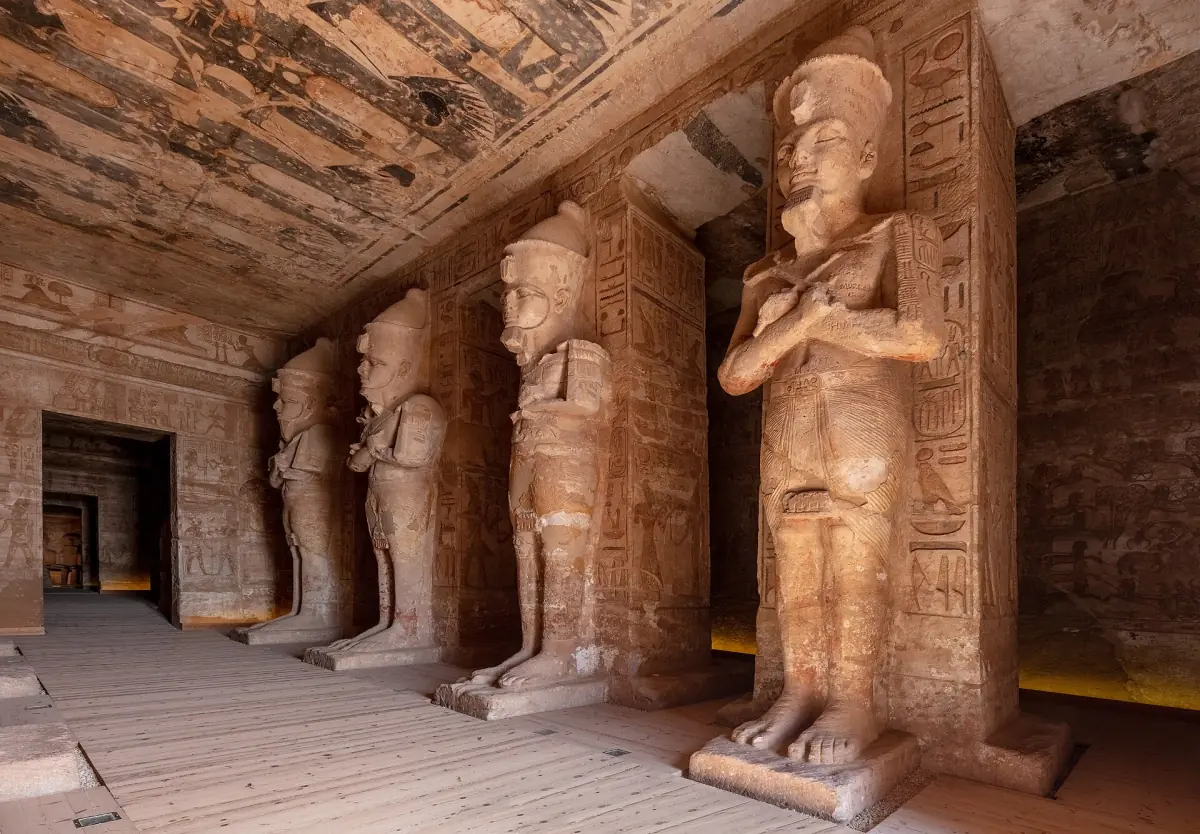
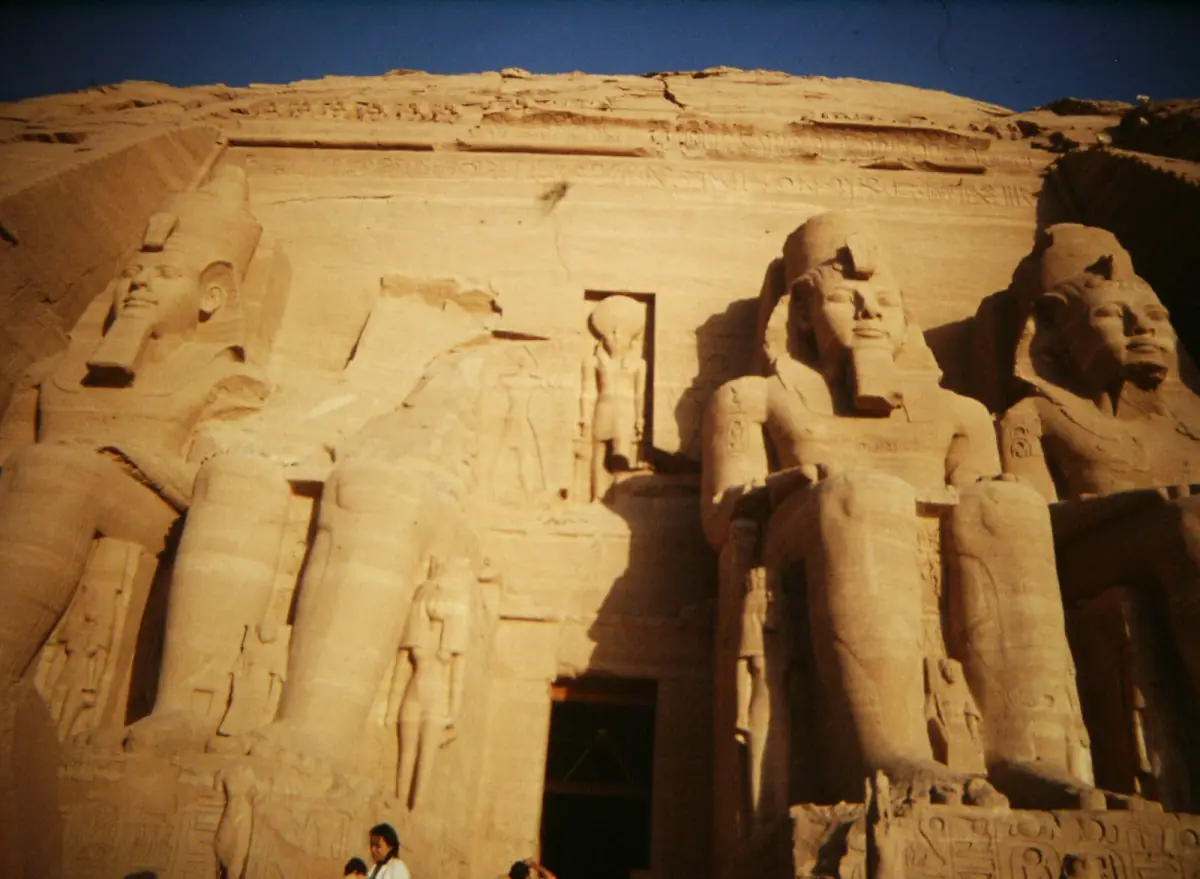
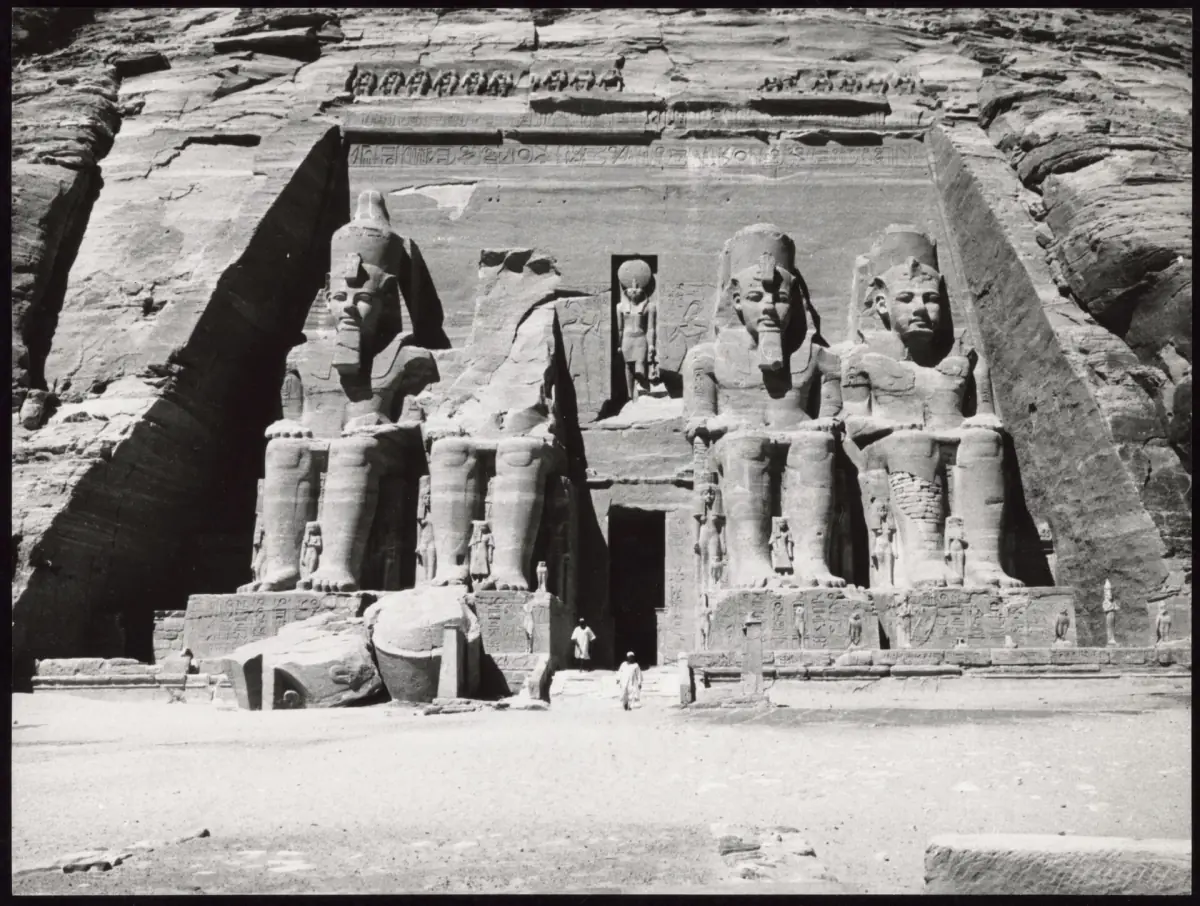
Abu Simbel is two temples cut into the rock. The Great Temple of Ramesses II is the large one, and the smaller Temple of Hathor and Nefertari stands to the north. Most visitors only see the facades in photos. Inside, the rooms follow a straight line from the entrance to the sanctuary at the back.
The Great Temple has two pillared halls, a vestibule and the sanctuary. The small temple has one pillared hall, a vestibule and its own sanctuary. A normal entrance ticket covers both temples. The 2026 price for foreign adults is EGP 750, and the site is open daily from 06:00 to 17:00. See the Abu Simbel tickets page for the full price list, or look at Abu Simbel day trips from Aswan if you want the transport and a guide arranged.
Inside the Great Temple of Ramesses II
The rooms run one behind the other along a single axis. Walk them in this order.
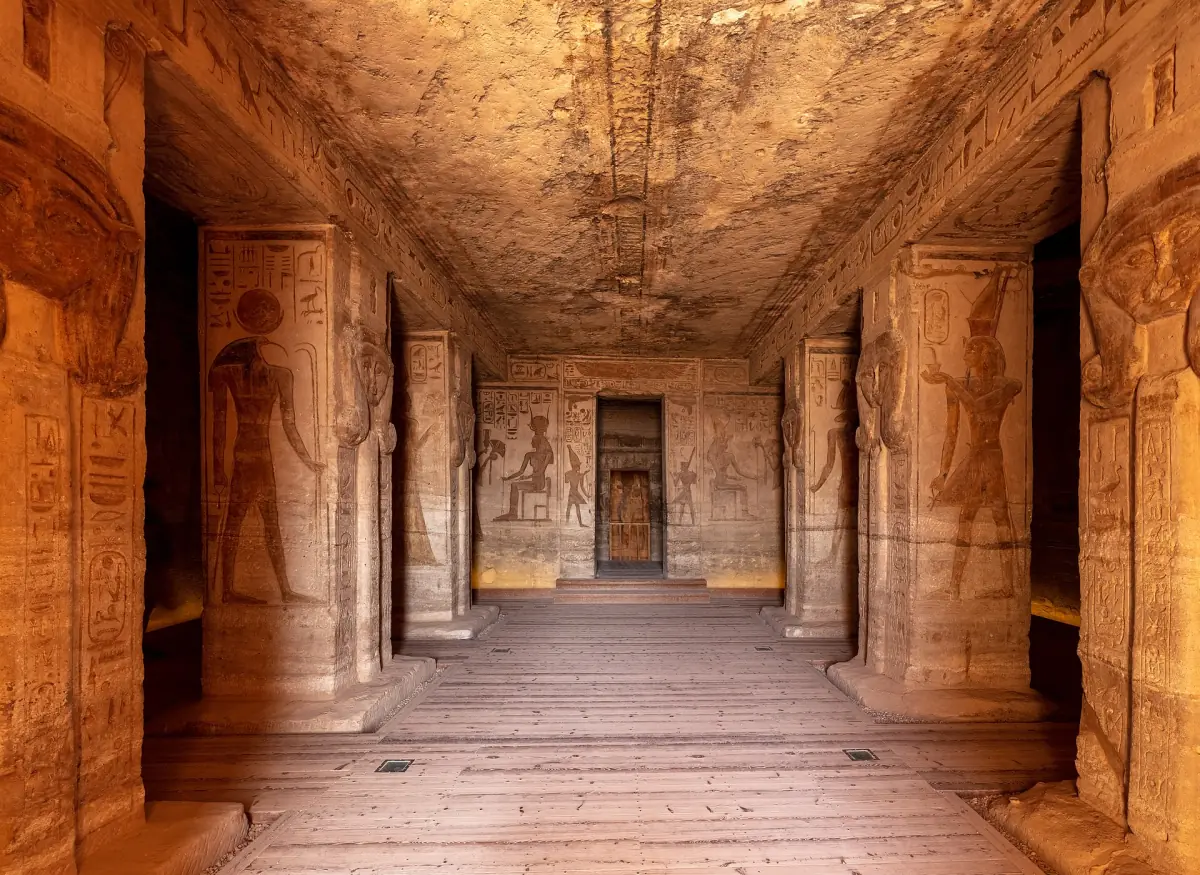
The first pillared hall
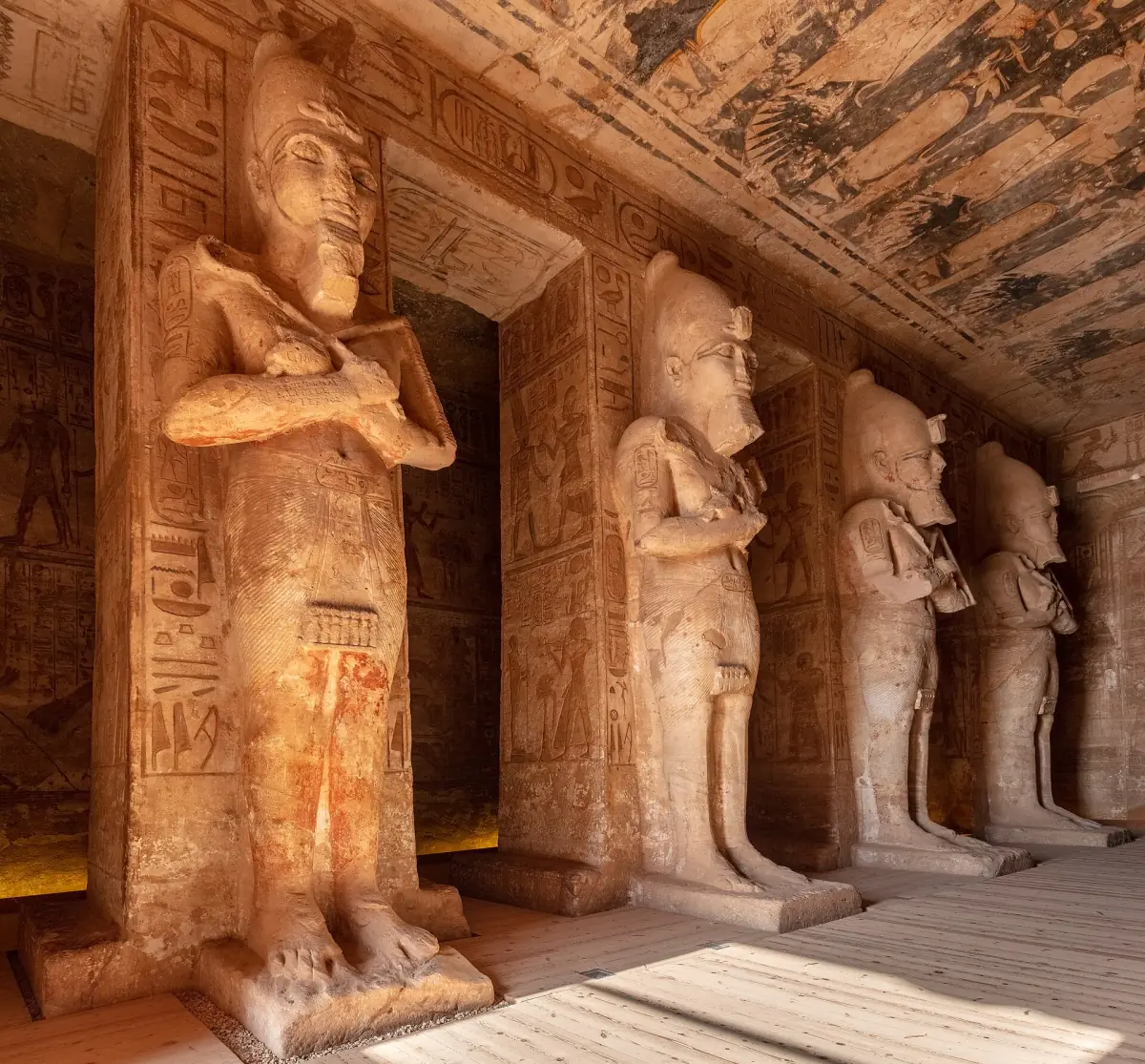
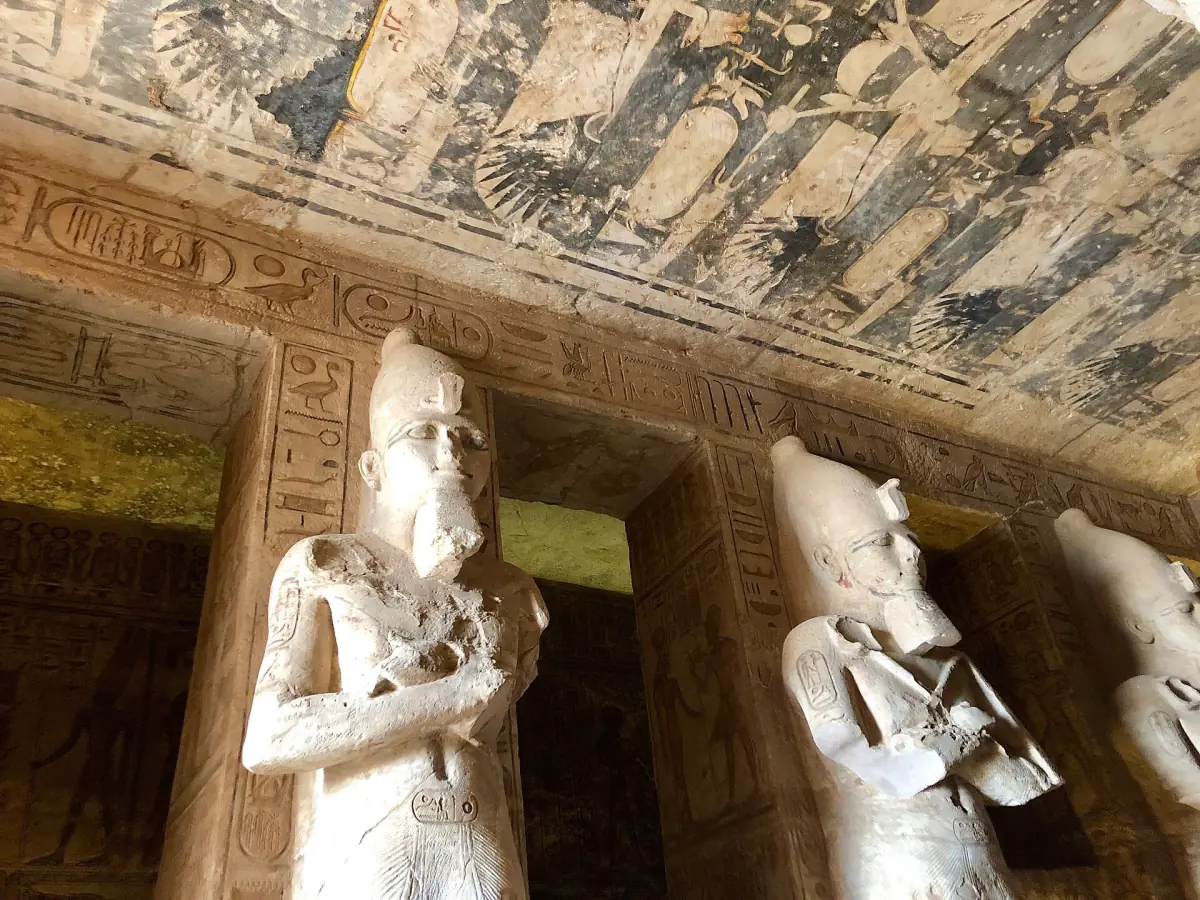
Eight figures of Ramesses as Osiris stand against the pillars. They line the hall and lead the eye toward the back. The north wall carries the scenes of the battle of Kadesh. Look up as well: the ceiling above the pillars is painted.
The second hall
A smaller hall with four pillars. It lies between the great hall and the vestibule, closer to the sanctuary.
The vestibule
A short transition room between the second hall and the sanctuary. Turn around here and look back along the axis.
The sanctuary
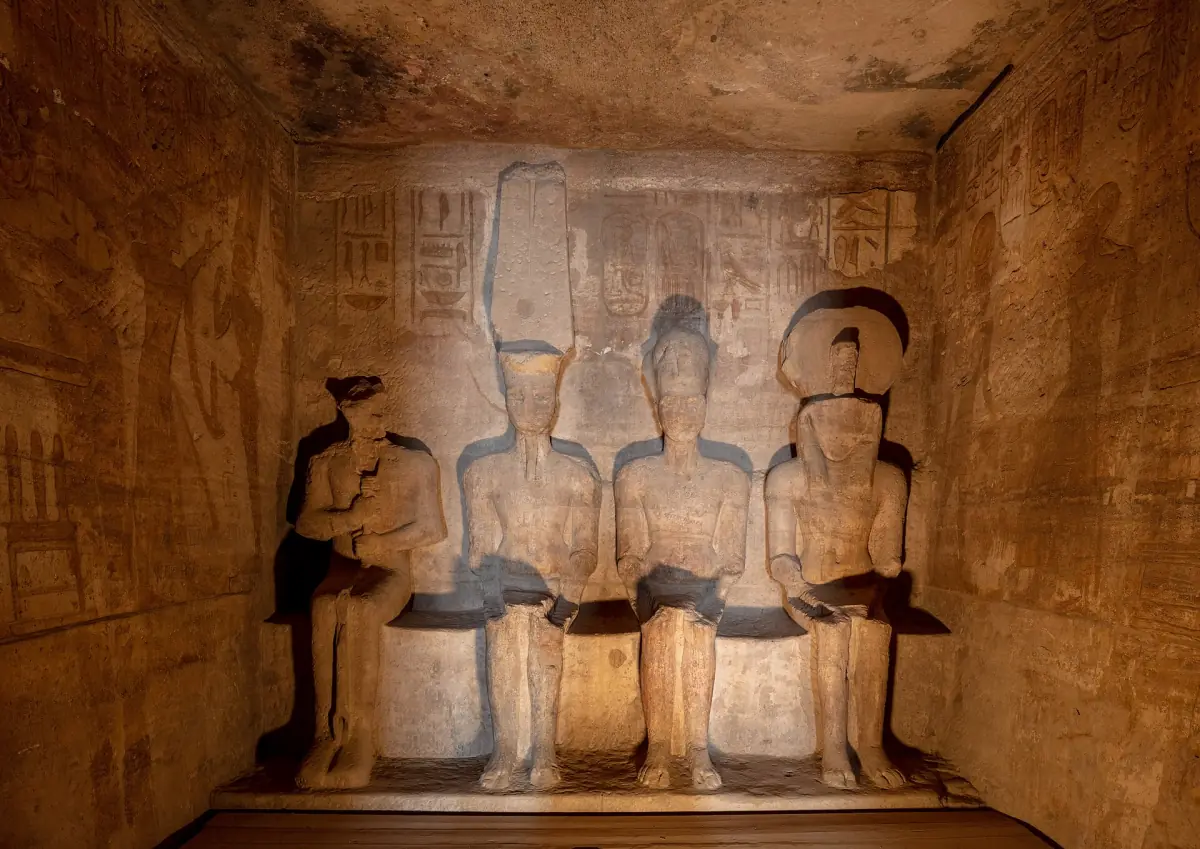
Four seated figures at the back wall: Ptah, Amun-Re, the deified Ramesses and Re-Horakhty. On 22 February and 22 October the sun reaches the figures here. More on the sun festival →
The Osiris pillars and the painted ceiling
The first hall is the room most people remember. The Osiris figures show Ramesses with crossed arms, the pose of the god of the dead. Each one stands against a pillar and faces the central aisle. Between them the ceiling carries painted decoration that is easy to miss if you only look straight ahead.
Because the hall is long and narrow, it works best if you first stand at the entrance and look along the axis to the sanctuary. Then walk down one side and look at the walls at close range. Take your time at the side walls, where the carved details are closest.
Our pick: temples on the way to Aswan
A guided day from Luxor with Edfu, Kom Ombo and Abu Simbel, entry fees included.
Hand-picked tours, booked through GetYourGuide. Prices are indicative starting prices in US dollars (as of October 2026). Tap a tour for live availability and the current price in your currency.
Abu Simbel tours and tickets from Aswan
Day trips with transport, entry to both temples and a guide, plus other ways to reach Abu Simbel, with live prices and availability.
Reliefs and the sanctuary
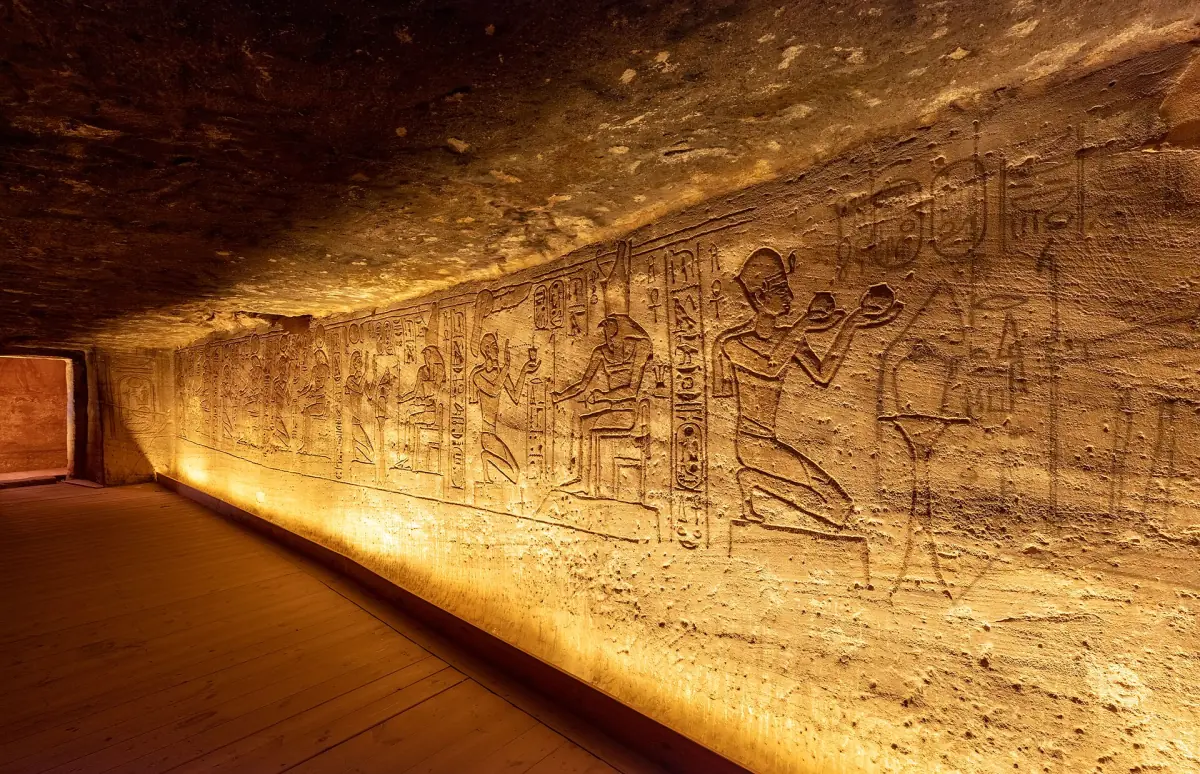
The walls tell a story of the king as a victorious ruler and as a god among gods.
The best known scene is the battle of Kadesh. It shows Ramesses in his chariot and fills much of the north wall of the great hall. The king also appears striking down enemies, a standard picture of royal power. The reliefs show how the king wanted to be seen. They are not a neutral record of the battle. The history page explains what we know about Kadesh and the building of the temple.
In the sanctuary the four figures sit side by side. Ramesses is one of them, shown among the gods. On the two sun festival dates the light crosses the whole temple and reaches the figures. Ptah is the one figure the light does not reach.
Inside the Temple of Nefertari
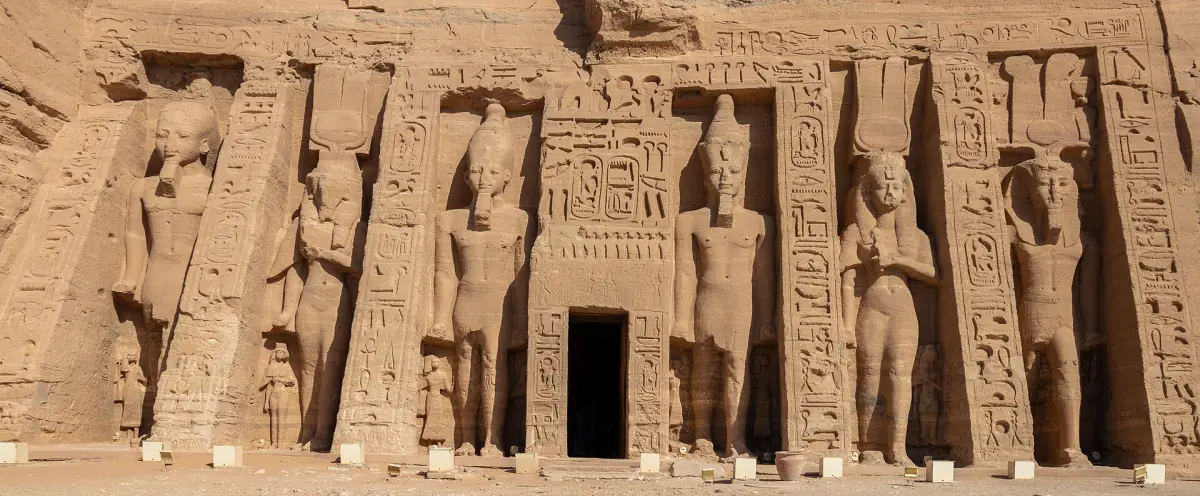
The small temple is dedicated to the goddess Hathor and to Queen Nefertari, the great royal wife. On the facade the queen is shown at nearly the same size as the king. Inside there is one hall with six pillars, a vestibule and the sanctuary. Hathor appears there as a cow goddess.
The rooms are much smaller than in the Great Temple, so the hall can fill quickly when a group arrives. The temple is not a tomb. Nefertari's tomb lies in the Valley of the Queens. Our Nefertari temple guide covers the small temple in full.
The rooms of both temples compared
| Room | Great Temple | Temple of Nefertari |
|---|---|---|
| First hall | Pillared hall with 8 Osiris figures | Hall with 6 pillars |
| Second hall | Hall with 4 pillars | – |
| Vestibule | Yes | Yes |
| Sanctuary | Ptah, Amun-Re, deified Ramesses, Re-Horakhty | Hathor as a cow |
| Facade figures | 4 seated figures of Ramesses | 6 standing figures, 4 of Ramesses and 2 of Nefertari |
For most visitors the Great Temple deserves more of the time, because it has more rooms and the reliefs. Do not skip the small temple, though. It is a short walk away, and its hall shows the queen in a way few other temples do.
Photo rules inside the temples
Personal photos and video with a phone or a camera are allowed at archaeological sites in Egypt. Inside the rooms you must not use flash. Professional lighting and equipment that blocks other visitors need a permit, and commercial filming goes through the antiquities authorities.
If you plan to bring a tripod, a drone or any professional gear, ask at the gate before you travel. Do not assume that the private photo permission covers it. Most tours include both interiors, but a side room can be closed on the day, so treat every room as a bonus rather than a promise.
Inside Abu Simbel: frequently asked questions
Can you go inside the Abu Simbel temples?
Yes. Your entrance ticket covers the interior of both the Great Temple and the Temple of Nefertari. The site is open daily from 06:00 to 17:00, with last entry at 16:00.
Can you take photos inside Abu Simbel?
Personal photos and video are allowed, but not with flash indoors. Professional lighting, blocking equipment and commercial filming need a permit.
What is in the sanctuary?
Four seated figures: Ptah, Amun-Re, the deified Ramesses and Re-Horakhty. The sun reaches the figures on 22 February and 22 October.
Is the small temple also open inside?
Yes. It has a hall with six pillars, a vestibule and a sanctuary dedicated to Hathor. It is included in the same ticket.
Is the ticket price the same on the sun festival days?
No. In 2026 foreign adults pay EGP 750 on a normal day and EGP 1,200 on 22 February and 22 October.
Is this the official site of the temples?
No. This is an independent travel guide. It does not run tickets or opening hours, and it is not connected to the authorities that manage the site.