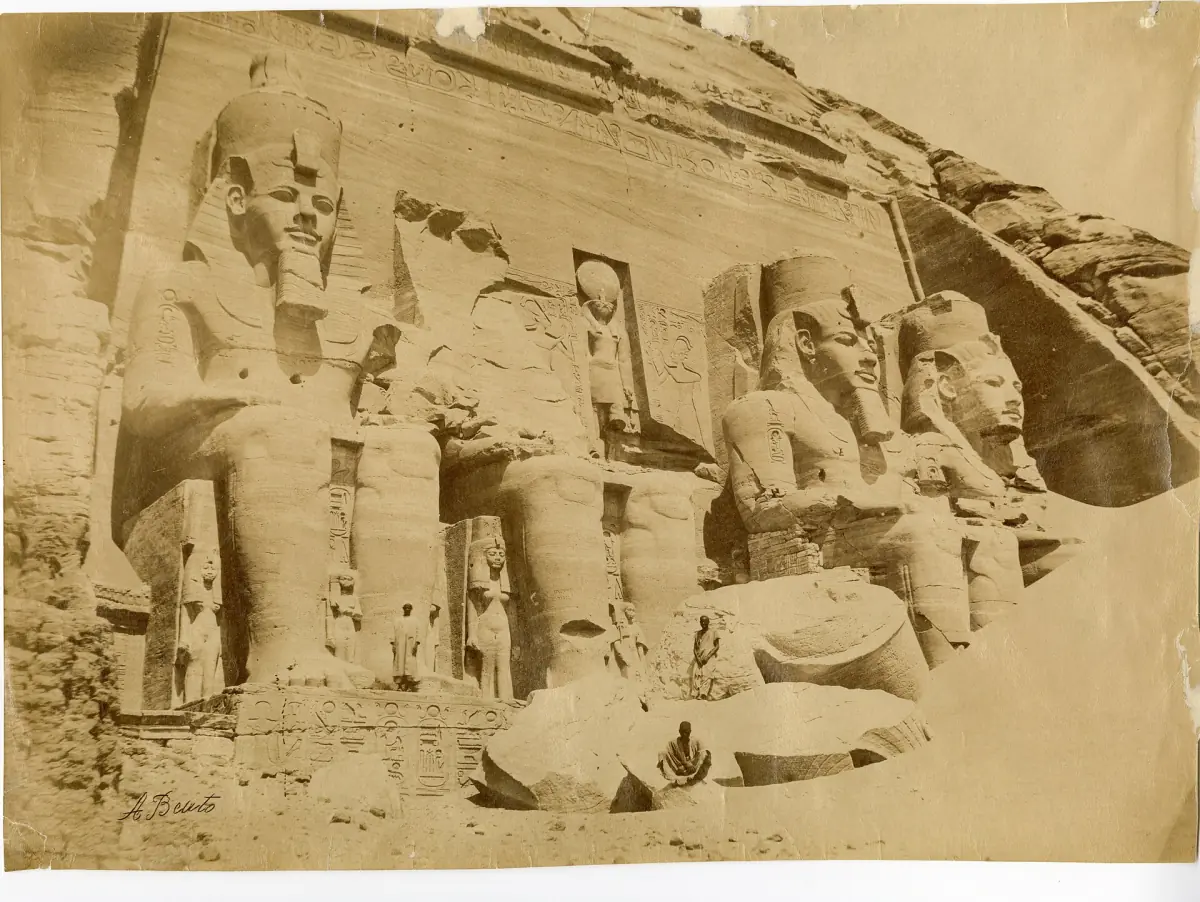
Abu Simbel history in short
Abu Simbel was built for Ramesses II, a king of the 19th Dynasty, around 1264 BC. The site lies in Nubia, in the far south of Egypt. It has two temples: the Great Temple for the king and the gods, and a smaller temple for the goddess Hathor and the king's wife Nefertari. Both are cut into the rock.
Any date for the building is approximate. Today the site is part of a World Heritage property inscribed in 1979, the Nubian Monuments from Abu Simbel to Philae. If you want to visit, start with the Abu Simbel tickets page for prices and hours.
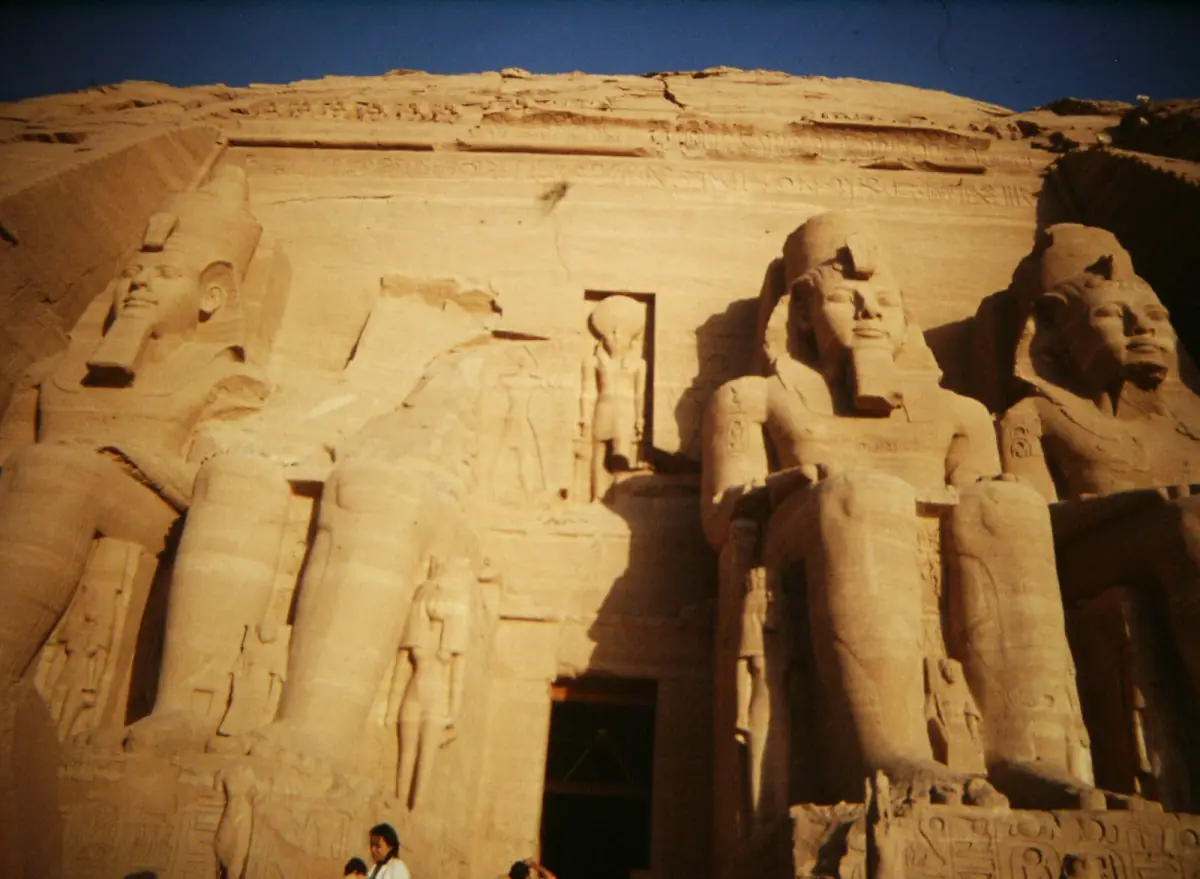
Abu Simbel timeline
From the New Kingdom to the rescue of the 1960s.
Around 1264 BC
Ramesses II has the Great Temple and the small temple cut into the rock. The Great Temple is dated to this time.
In antiquity
An earthquake brings down the upper part of one colossus. The pieces still lie in front of the facade.
1813 and 1817
Johann Ludwig Burckhardt visits in 1813 and is the first European to do so. In 1817 Giovanni Belzoni comes to the site.
1960 to 1980
UNESCO runs a campaign to save the monuments of Nubia. The Abu Simbel temples are moved in the 1960s and open at the new site in 1968. The full story of the move →
Ramesses II and the battle of Kadesh
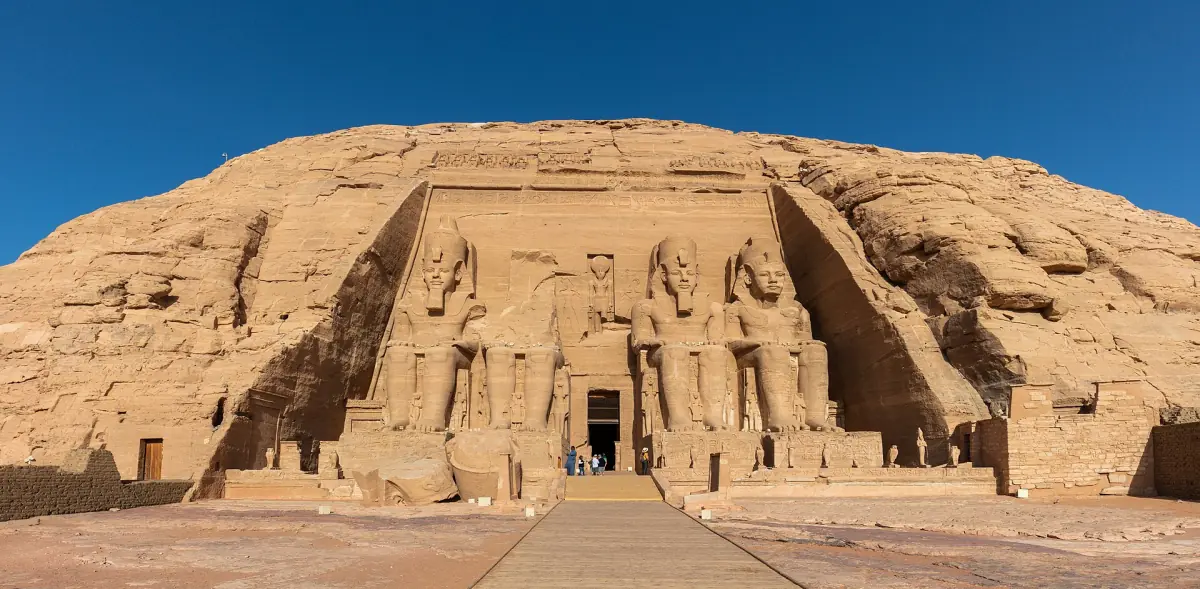
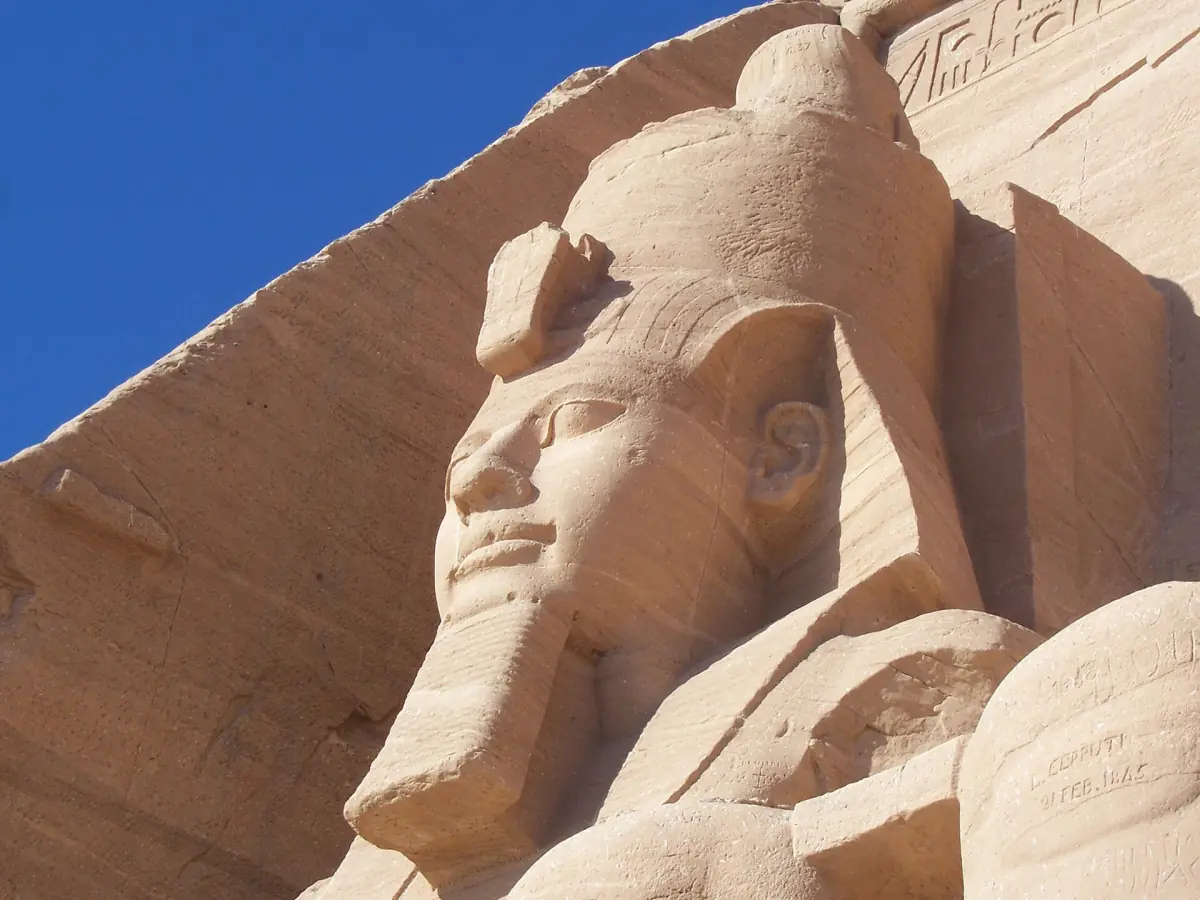
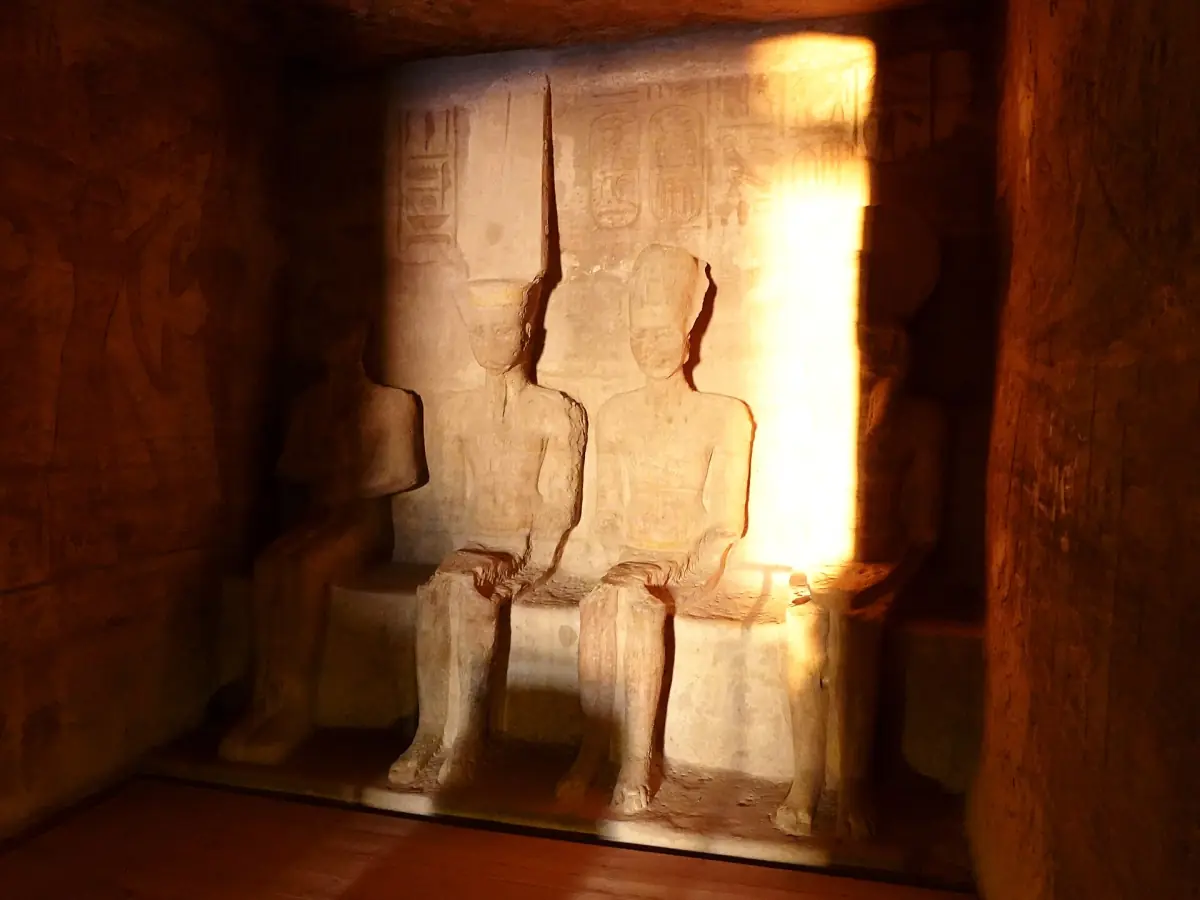
At Abu Simbel the cliff itself became the building. The facade shows four huge seated figures of the king. Inside, the great hall shows him in battle.
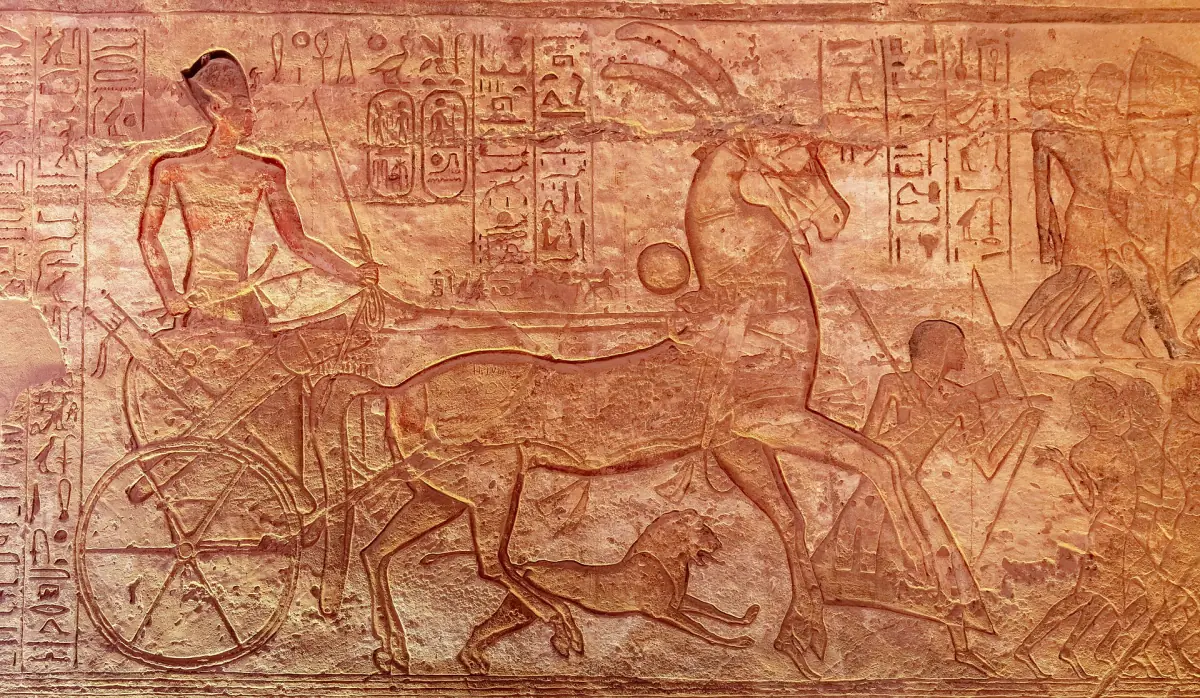
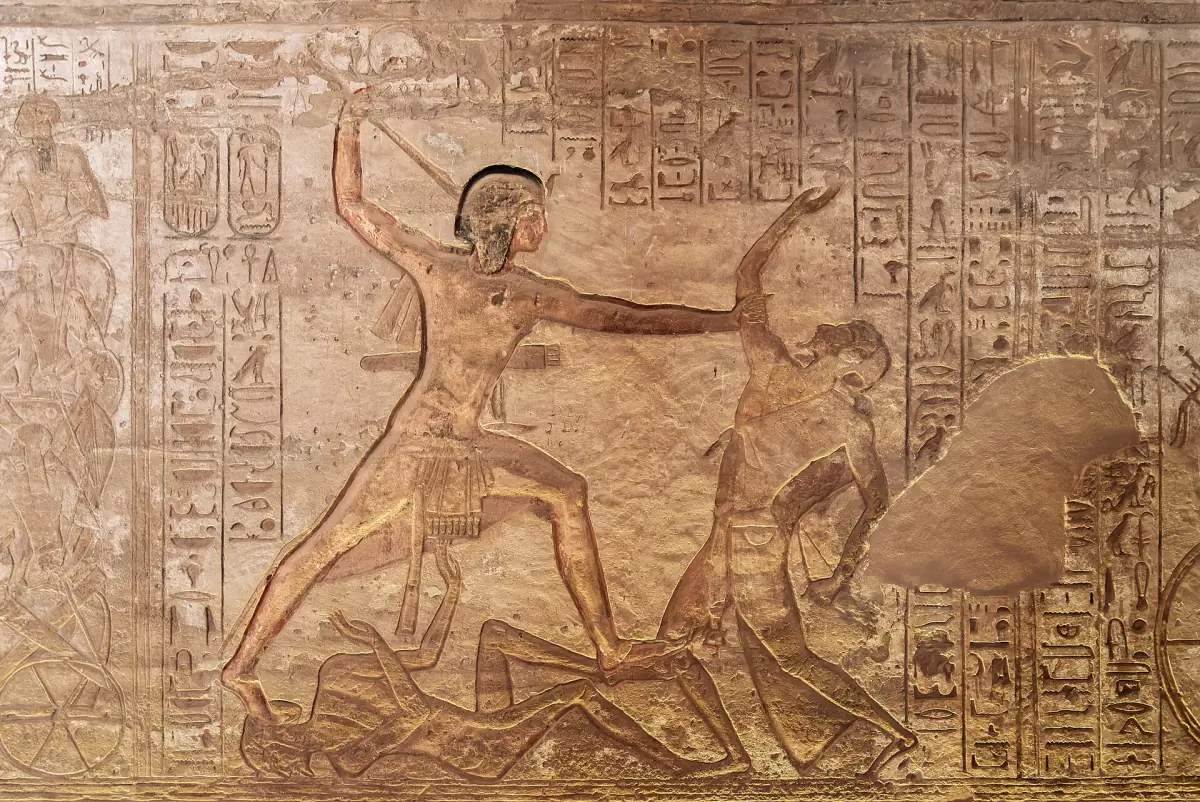
The best known scene is the battle of Kadesh. The wall shows the king in his chariot, with the battle in the fifth year of his reign. It is a royal image. It tells you how Ramesses wanted the battle to be remembered. It is not proof of a clear victory.
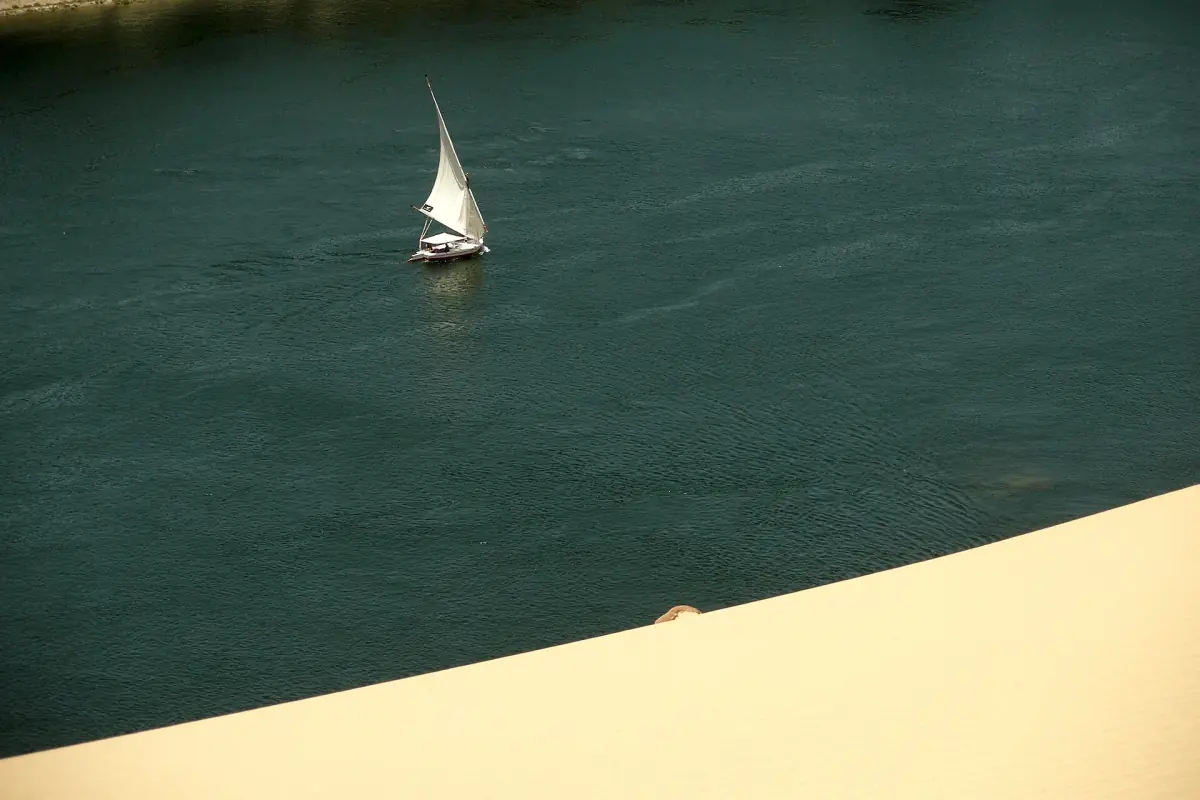
Our pick: Abu Simbel on a Nile cruise
Three nights on the Nile with an Egyptologist and the Abu Simbel excursion.
Hand-picked tours, booked through GetYourGuide. Prices are indicative starting prices in US dollars (as of October 2026). Tap a tour for live availability and the current price in your currency.
Abu Simbel tours and tickets from Aswan
Guided day trips to the temples, with entry, transport and a guide who can explain the history on site, with live prices and availability.
Nefertari and the small temple
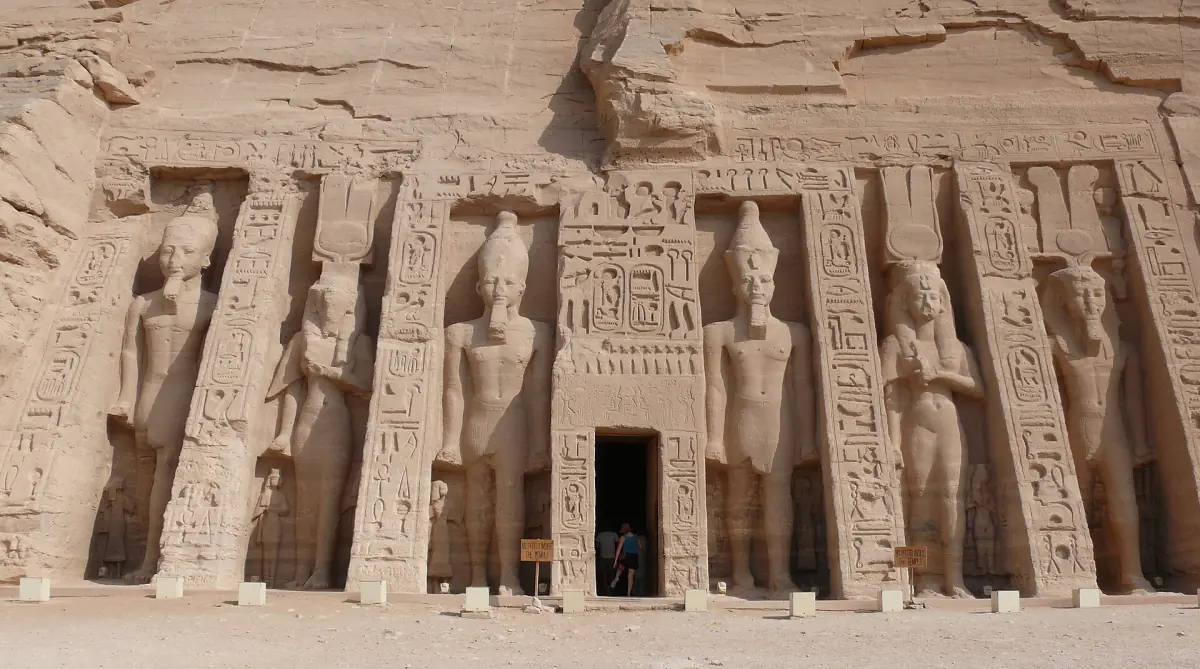
The small temple is unusual because it honors a queen. It is dedicated to Hathor and to Nefertari, the Great Royal Wife of Ramesses. On its facade there are six standing figures about 10 m high: four of the king and two of the queen. The queen is shown at nearly the same scale as the king.
The temple is not a tomb. Nefertari's tomb is in the Valley of the Queens. See the Temple of Nefertari page for the rooms and the statues.
The fallen colossus
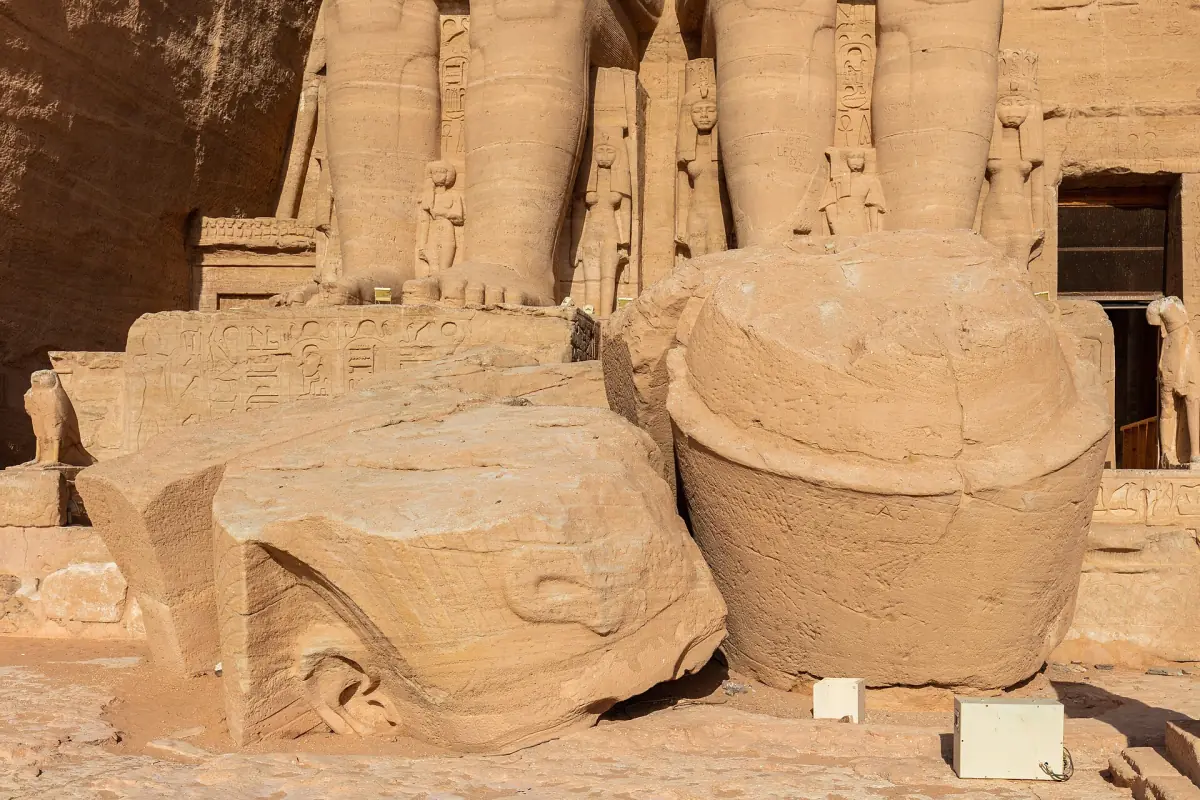
Look at the facade and you see that one of the four colossi has lost its upper body. The fallen part lies at its foot. The damage dates to antiquity and is blamed on an earthquake. It has nothing to do with the move of the temples in the 1960s.
The pieces still lie in front of the facade. They also give you a sense of how large the figures are.
Rediscovery for Europe: Burckhardt and Belzoni
The temples were never unknown to the people who lived in Nubia. They were new to Europe.
In 1813 the Swiss traveler Johann Ludwig Burckhardt became the first European to see Abu Simbel. That is why historians speak of a rediscovery for Europe rather than a discovery of a temple nobody knew. Giovanni Belzoni visited in 1817.
A photograph from the 1870s or 1880s still shows sand in front of the temple. Today the road and the airport make Abu Simbel a day trip. If you want the practical side, the how to get to Abu Simbel page explains the options.
Key dates at a glance
| Date | Event |
|---|---|
| c. 1264 BC | The Great Temple of Ramesses II, 19th Dynasty |
| Year 5 of the king's reign | The battle of Kadesh, shown on the walls |
| 1813 | Burckhardt, first European visitor |
| 1817 | Belzoni at the site |
| 1960 to 1980 | UNESCO campaign for the monuments of Nubia |
| 22 September 1968 | Opening of the temples at the new site |
| 1979 | World Heritage inscription |
For most visitors, the history makes more sense after the visit than before. Read the timeline once on the way, then use the sections above when you stand in front of the facade. The history of the Nile gives the wider picture of Egypt along the river.
Abu Simbel history: frequently asked questions
Who built Abu Simbel?
Ramesses II of the 19th Dynasty, around 1264 BC. The small temple was built for the goddess Hathor and for his wife Nefertari.
Why was Abu Simbel built?
The site lies in Nubia, in the far south of Egypt. The temples were cut for the king and the gods, and for Nefertari.
Who found Abu Simbel?
The temples were known to local people. Johann Ludwig Burckhardt was the first European to visit, in 1813. Giovanni Belzoni followed in 1817.
Did Ramesses win the battle of Kadesh?
The temple walls show him in triumph. Because the scene is royal self-presentation, it does not prove a clear victory.
Why is one colossus broken?
The upper part of one figure fell in antiquity, blamed on an earthquake. The pieces lie in front of the facade.
Is this the official site of Abu Simbel?
No. This is an independent travel guide with no connection to the authorities that manage the temples.